
Home / Solar Generators
Portable power
Solar generators
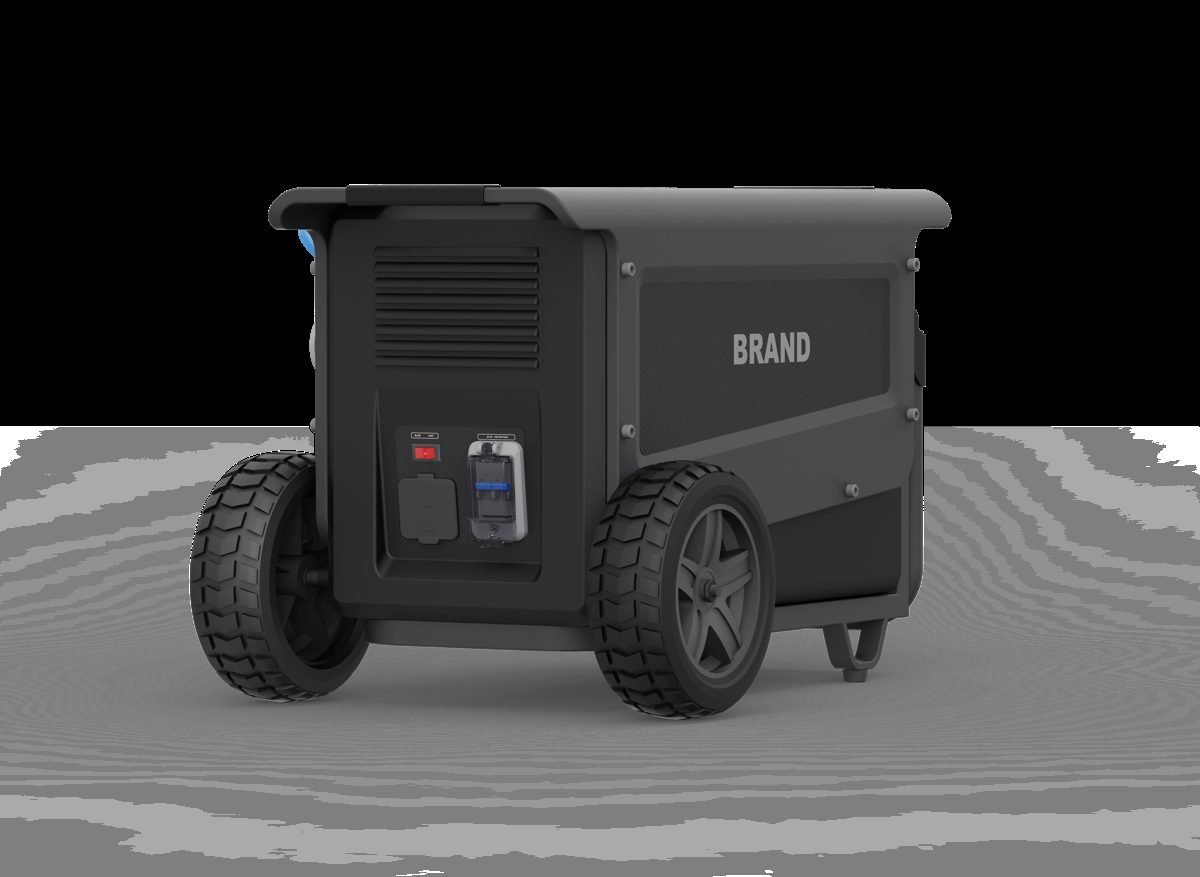
"Solar generator" is the market's name for a portable power station that recharges from solar panels — a battery, an inverter and a charge input in one box, with no fuel and no noise. In this catalogue the generator programme pairs the eleven documented stations with the Solar Sun 220 panel as the solar charging option; the pairing of the panel to a specific station (input window, connectors) is confirmed per order. This page sets out that logic using the figures the records actually state — rated power and capacity per station, panel power and voltage for the Solar Sun 220.
The station side of the pairing
Generator duty splits by scale. For home backup of lights, communications and a fridge-class load, the mid band does the work: S015 (1,500 W / 1,488 Wh), S1 (2,000 W / 1,024 Wh) and S024 (2,400 W / 2,232 Wh). For off-grid living and worksites, the top band carries the programme: S3 and W3 (3,600 W / 3,072 Wh) and the 5,040 Wh flagships — S5-N (4,000 W), S5-E and W5 (5,000 W). The full table is on the portable power stations page.
The panel side: Solar Sun 220
The catalogue's panel is the Solar Sun 220: 220 W panel power at 20.5 V, recorded for portable energy applications. One panel maintains a small station in daily light duty; a generator programme that cycles a large station daily is an array calculation — daily watt-hours needed, divided by 220 W and by your site's peak-sun hours, gives the panel count. The buying guide works that arithmetic through with the full model table.
| Panel model | Solar Sun 220 |
|---|---|
| Panel power | 220 W |
| Panel voltage | 20.5 V |
| Station range for pairing | 600 W / 512 Wh to 5,000 W / 5,040 Wh |
| Home-backup band | S015, S1, S024 |
| Off-grid band | S3, W3, S5-N, S5-E, W5 |
Generator vs station: what to confirm
Because a generator is a system, two confirmations matter more than any headline figure: that the chosen station's solar input accepts the panel configuration you plan (voltage window and connectors), and the recharge time for that pairing in the current production record. Both are confirmed per model pairing at quote stage — the catalogue records state the station and panel headline figures separately, and this page does not invent the combined numbers.
Is a solar generator silent and fuel-free?
Yes — it is a battery station recharged by panels; there is no engine. Runtime and recharge depend on the station capacity and panel array you spec.
Which station for a home backup programme?
Start with the load list (see the buying guide). Most home programmes land on the 1,488–2,232 Wh band; whole-home ambitions need the 5,040 Wh flagships and a multi-panel array.
Generator etiquette: noise, fumes and neighbours
Part of the solar generator's appeal is social. A fuel generator announces itself — noise through the night, exhaust at the fence line, a fuel run at the worst moment — and in dense housing, campsites and market rows that announcement is the product's real cost. A battery station is silent, fume-free and usable indoors at the point of need, which is why the category keeps taking share in exactly the settings where people live closest together. For programme buyers this reframes the pitch: the comparison is not station versus generator on specification, it is station versus generator on everything around the specification — storage safety, indoor use, maintenance absence and neighbour relations. The specification still has to close, which is what the load-list method is for; but the sale usually starts with the silence.