
Home / PCB Assembly (PCBA)
Industrial components
PCB assembly (PCBA)
PCB assembly is the service end of the components line. This page is headed "PCBA" deliberately: the exact term buyers use for the assembled board, and the term under which this service is offered here. Six catalogue records stand behind the service, and one carries the full process description quoted across this page.
What the service covers
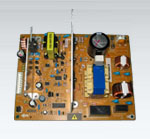
The record describes specialisation in PCB assembly for all kinds of electronic products on OEM and ODM requirements, with PCBA applied across communication, automatic control, home appliance and power supply products. The process starts before assembly: the buyer's design is analysed, with recommendations for optimising the PCB schematic and layout and for improving assembly reliability, including DFM (design for manufacturability) and DFR (design for reliability) input.
Assembly processes
| DIP assembly | Manual insertion (MI) or auto-insertion (AI); wave soldering or selective soldering |
|---|---|
| SMD assembly | SMT machines with reflow soldering |
| Process option | Lead-free process available |
| Order quantities | Flexible production arrangement to fit different order quantities |
The inspection regime
The record lists six inspection and process-control stages applied through the assembly process — the most quotable part of the service, and the reason it is published in full:
- Visual checking.
- ICT (in-circuit test) and FT (function test).
- SPI (solder paste inspection).
- Flying-probe in-circuit test for manufacturing defect analysis.
- AOI (automatic optical inspection) to find and correct faults across the process.
- X-ray testing to find and correct defects that cannot be seen by eye, during BGA and PTH soldering.
PCBA inside a wider programme
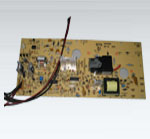
PCBA rarely ships alone from this desk: the same catalogue supplies the terminal blocks, connectors and harnesses the boards interconnect with, and the customised-service procedure (drawings in, prototypes, DFM feedback, final samples) governs the combined order. Lighting buyers use the same desk for the boards inside custom lighting programmes.
Do you assemble both DIP and SMD?
Yes — DIP by manual or auto-insertion with wave or selective soldering; SMD by SMT with reflow, per the record.
Is lead-free available?
The record states the plant can meet lead-free process requirements.
What should I send for a PCBA quote?
Your design files (and any drawings/samples per the customised-service procedure) so the design analysis and DFM recommendations can be made before pricing production.
What to send with a PCBA enquiry
A PCBA enquiry prices at the speed of its documentation. The complete pack is short: the board files, the BOM with acceptable-substitute notes, the assembly quantities with their ramp, and the test expectations — which of the six recorded inspection and test methods the programme actually requires, and at what coverage. Enquiries that arrive with the pack get engineering attention; enquiries that arrive as a photograph of a board get questions. The DFM conversation is the other half of the value: a board reviewed before the first run, against the actual placement, soldering and inspection methods it will meet, avoids the redesign that costs more than the review ever could. Send the pack, state the ramp, and name the test expectation — the quotation that comes back will be a number you can plan on.
PCBA as part of a product programme
Board assembly rarely travels alone. The boards in a lighting or control programme arrive with their interconnect, their harness and often their battery decision attached, and the assembly conversation goes better when those neighbours are in the room. A PCBA enquiry made alongside the programme's harness and connector specification lets the DFM review catch the interface issues — the header the harness cannot mate, the block the enclosure cannot fit — while they are still lines on a drawing. That joined-up review is the practical reason this service sits inside a component catalogue rather than on a standalone site: the assembly is one act of a programme, and it should be specified like one.