
Home / LED Filament Bulbs
Bulb programme
LED filament bulbs
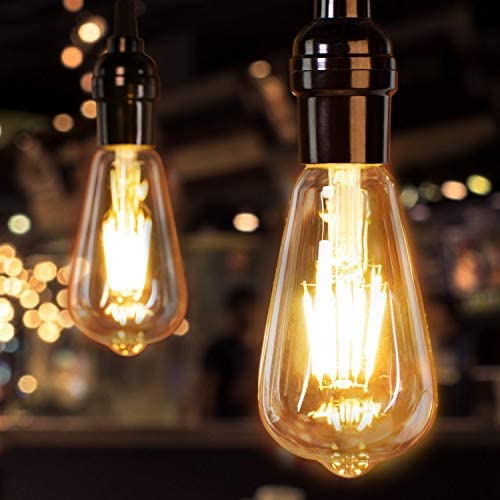
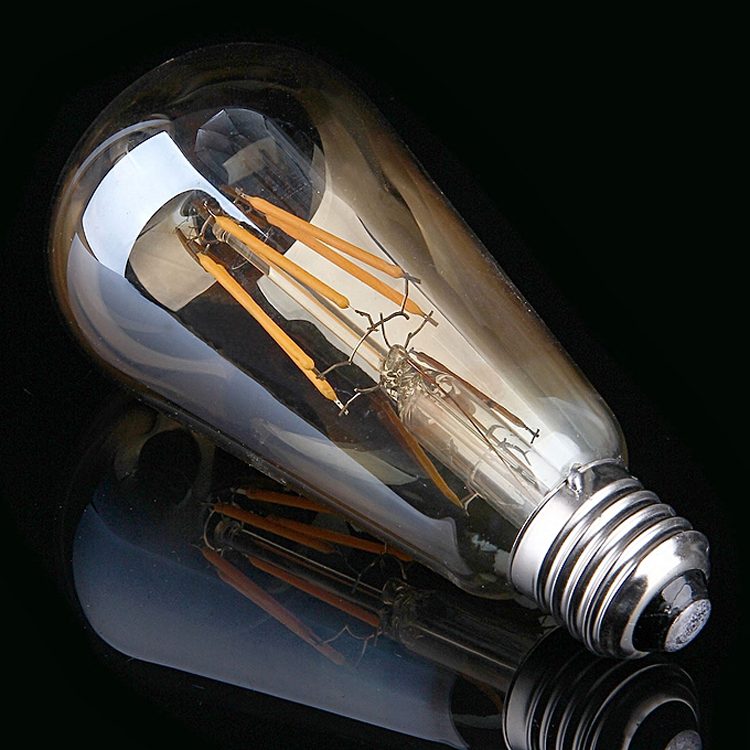
Filament bulbs are bought for how they look: the visible LED filament in tinted glass gives the warm, low-glare character of an Edison bulb with LED running costs. The catalogue carries one filament model — an ST19 in amber glass — documented here as a single-model page, with the selection notes a buyer needs around it.
ST19 amber glass LED filament bulb
The record describes an ST19 amber glass bulb at 2700 K soft warm white, dimmable, with 450 lm of luminous flux and a 270° beam. The base list is unusually wide — B22, E14, E26, E27, G9, GU10 and GU5.3 — which makes the model a flexible decorative platform across chandeliers, vanity fittings, ceiling fans and table lamps. The accompanying product description in the record covers the family traits: brass-base options with better conductivity than aluminium, high light transmission above 90%, and CCT options of 2700 K, 4500 K and 6500 K across the filament programme.
| Shape | ST19, amber glass |
|---|---|
| Colour temperature | 2700 K (soft warm white) |
| Dimmable | Yes |
| Luminous flux | 450 lm |
| Beam angle | 270° |
| Bases (record) | B22, E14, E26, E27, G9, GU10, GU5.3 |
| Recorded warranty | 3 years |
| Applications | Indoor — home, hospitality, decorative fittings |
Selection notes for filament programmes
- Amber glass is a mood choice: it warms the 2700 K output further and suits hospitality, restaurants and living spaces over task areas.
- Dimming is recorded as available; confirm dimmer compatibility lists for your market at quote stage.
- The wide base list means one decorative platform can cover several fitting standards — state the base mix in your enquiry.
- Filament bulbs pair with the standard A60 line: decoration where it is seen, utility where it is not.
Is the filament bulb suitable for enclosed shades?
It is an indoor decorative bulb; open or vented decorative fittings show it best and keep it coolest.
Are other glass tints available?
The documented model is amber glass; ask about programme options when you enquire.
Pairing filament bulbs with fittings
Filament bulbs are chosen by silhouette, and the fitting decides which silhouette works. In open pendants and chandeliers, the globe and elongated formats read best — the filament is the decoration, so the glass should be clear and the shape deliberate. In shaded fittings the filament is wasted; spend the budget on the standard A60 line instead. Colour temperature is the second decision: the warm 2700 K end of the recorded options flatters wood, brass and warm paint, while 6500 K filament in a heritage-style fitting reads as a mistake. For programme buyers, filament bulbs sell as a designed set — bulb, fitting and temperature chosen together — which is why they hold margin that commodity bulbs cannot.
Filament bulbs in hospitality programmes
Hotels, cafés and restaurants buy filament bulbs as atmosphere infrastructure: the same warm point of light repeated across a dining room is a design system, and its failure mode is inconsistency — one replacement bulb at the wrong temperature reads as a stain on the whole room. Programmes therefore buy filament lines in matched batches, hold a small attic stock from the same batch, and record the chosen temperature alongside the fitting schedule. The recorded options support the approach: colour temperatures spanning 2700 K to 6500 K mean the batch discipline can be applied across every room type a property runs, from cellar-warm bar to bright breakfast room.