
Home / Portable & Folding Solar Panels
Portable power
Portable & folding solar panels
The panel offer in this catalogue is a single documented model — the Solar Sun 220 — recorded as a 220 W panel for portable energy applications. This page is written to the standard this site applies everywhere: the model is documented with what its record states, the pairing guidance is arithmetic rather than invention, and the details a buyer must confirm are listed as confirmations.
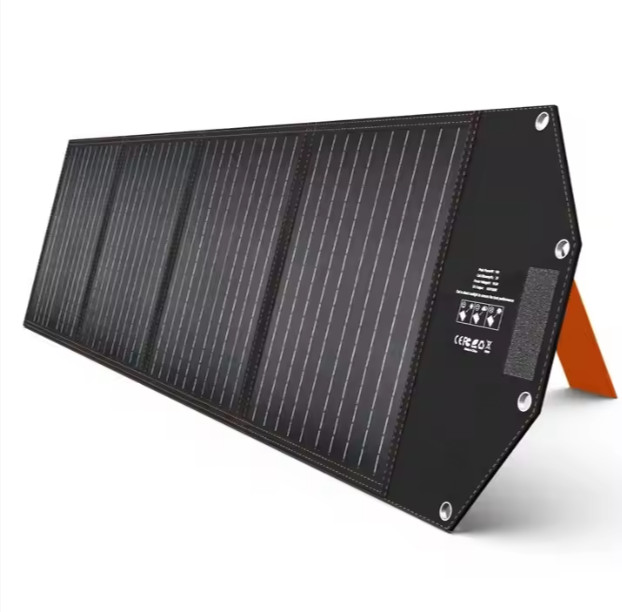
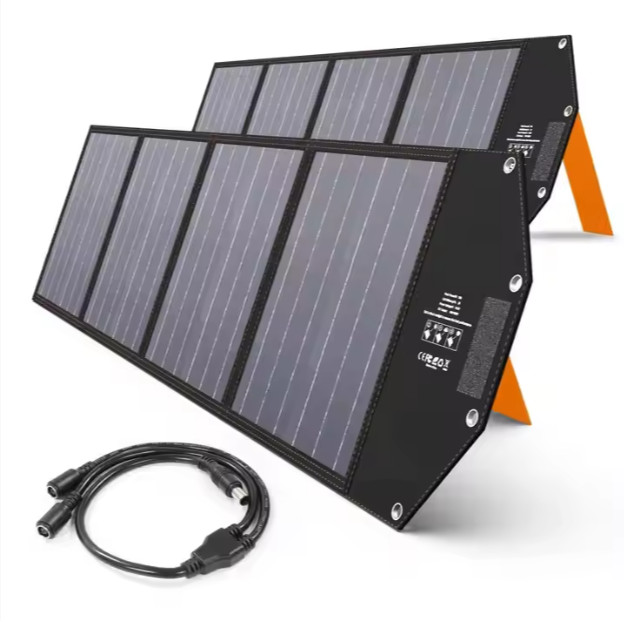
Solar Sun 220 solar panel
The record gives two figures: panel power of 220 W and a voltage of 20.5 V. That places the panel in the portable class built for power-station charging — the companion to the S and W series stations rather than a rooftop array panel. Its recorded role in the catalogue is explicit: "220 W solar panel for portable energy applications."
| Model | Solar Sun 220 |
|---|---|
| Panel power | 220 W |
| Voltage | 20.5 V |
| Recorded application | Portable energy applications |
| Application (record) | Solar panel for portable energy applications; station pairing confirmed per order |
How many panels does a programme need?
Work it from the load side. A station used for evening lights and devices might cycle 500 Wh a day: at 220 W and four peak-sun hours, one panel returns roughly 880 Wh of harvest before losses — one panel suffices with margin. A station cycling 3,000 Wh a day needs around four panels on the same arithmetic. The buying guide shows the full method, including the 85% usable-capacity planning rule.
Confirm before ordering
- Panel construction (folding format, dimensions and weight) for the current production build.
- Connector and cable set supplied, and compatibility with your chosen station's solar input window.
- Whether panels can be paralleled for multi-panel arrays in your programme.
Can the Solar Sun 220 charge any station?
The record describes it as a solar panel for portable energy applications. For a specific PENYA station, the desk confirms the pairing — input window and connectors — at quote stage; for third-party stations, match the 20.5 V panel voltage against the station's solar input window.
Is one panel enough for the 5,040 Wh flagships?
For maintenance charging, yes; for full daily cycling, no — size the array from your daily watt-hour budget as shown above.
Panel handling in the field
Folding panels live harder lives than rooftop modules — they are carried, leaned, packed wet and opened on gravel — and their programmes should be specified for it. Brief users to open the panel fully before judging output (a half-folded array under-delivers and misleads), to angle it toward the sun at each stop rather than leaving it flat from habit, and to keep the junction area dry when packing after rain. For rental and expedition channels, the panel is the component most likely to be returned 'not working' when it is merely dirty or shaded; a one-line care card in the carton eliminates most of those returns. Confirm the exact panel configuration and station pairing per order, and the field story stays as simple as the product.
Pairing discipline for resellers
Resellers of folding panels protect their returns rate with one habit: selling the panel as a named pairing, never as a generic accessory. A panel matched to a specific station model — confirmed configuration, confirmed pairing — arrives as a system the customer can succeed with on the first afternoon. A panel sold on wattage alone invites the mismatched-connector, wrong-window, disappointed-customer sequence that fills review sections. The catalogue's structure supports the discipline: one recorded panel format, documented beside the station range it serves, with the pairing confirmed per order. Build the shelf offer as panels-for-models and the category behaves.